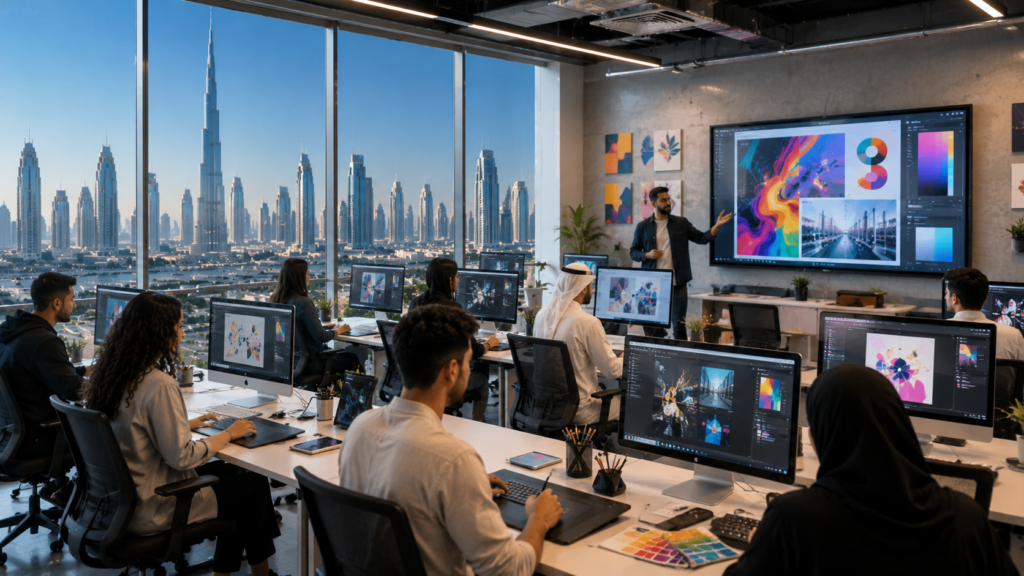
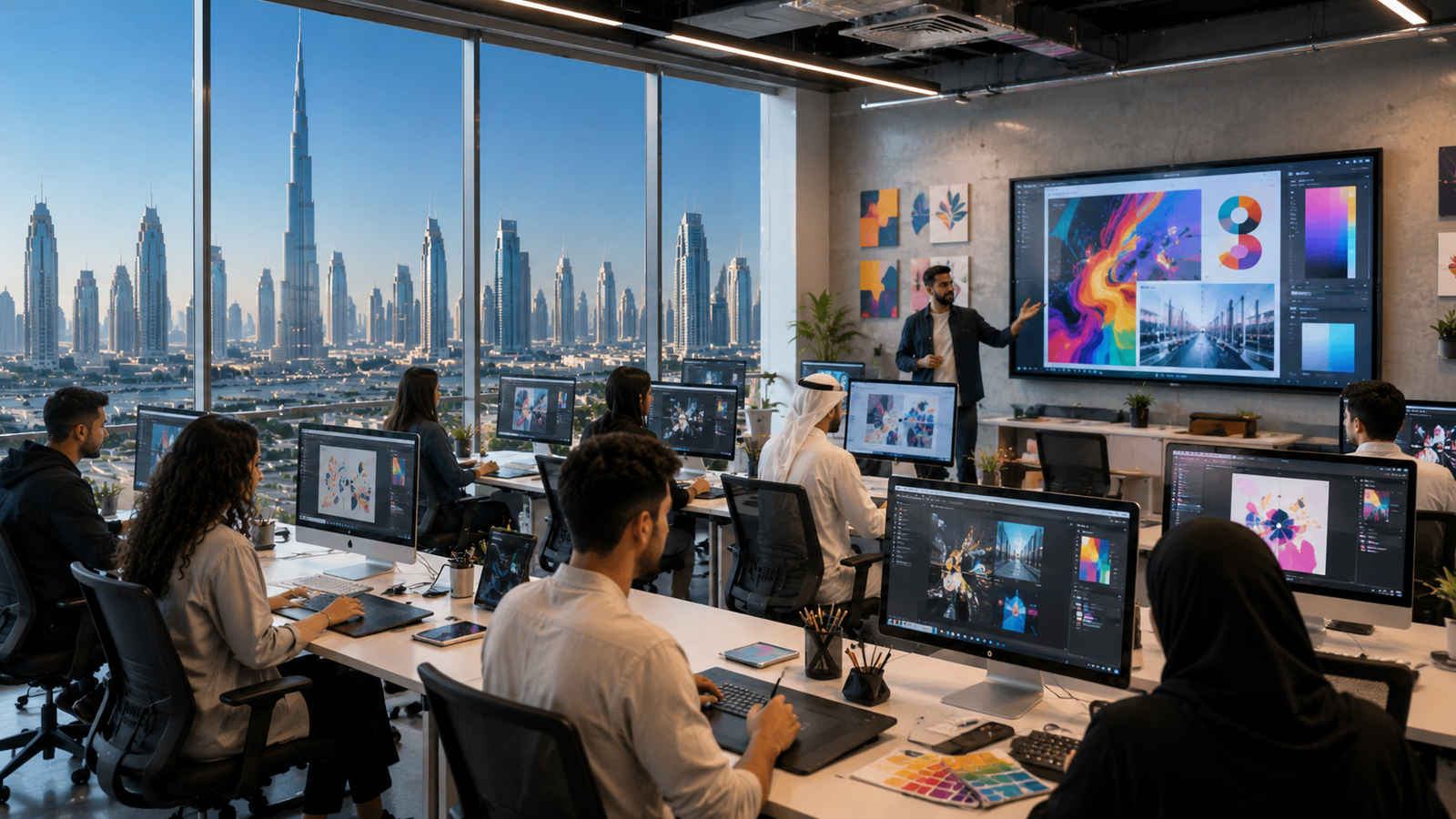
Walk into any office in Dubai or Abu Dhabi and you’ll notice something: branding matters here. Companies pour money into how they look, and that’s exactly why graphic design has turned into one of the more reliable creative careers in the country. But before you sign up for anything, you need a real handle on the graphic design courses fees in UAE, because prices swing wildly depending on where you look. Some courses cost less than a dinner out. Others cost more than a used car. This guide walks you through what actually drives those numbers, so you’re not guessing.
Why Graphic Design Is a Growing Career Choice in UAE
The UAE’s economy leans hard into digital marketing and e-commerce these days, and that shift hasn’t slowed down. Retail brands, real estate developers, hotels they all treat design as part of the business now, not some afterthought handled by whoever’s free. That’s kept demand for visual talent pretty steady, even when other industries wobble.
There’s also the flexibility angle, which a lot of students don’t think about until later. You could end up in-house at a company, at an agency, or freelancing for clients scattered across three continents while sitting in your apartment in Sharjah. That range is part of what makes the money spent on training worth it the skills don’t lock you into one narrow job.
What Determines Graphic Design Course Fees in UAE
Pricing isn’t standardized here, and honestly, that trips a lot of people up. A few things push the number up or down.
Accreditation is a big one. Institutes recognized by the government, or tied to a university, tend to charge more their paper actually means something to an employer later. Duration plays into it too. A weekend crash course on Illustrator will never cost what a six-month diploma costs, and it shouldn’t.
Then there’s curriculum depth. A program that gets into branding, typography, UI/UX, and portfolio work is going to cost more than a class that just teaches you which buttons to click in Photoshop. Location matters as well; an institute sitting in a prime business district usually charges a premium over one tucked away in a quieter part of town. And of course, online versus in-person changes the math entirely, which we’ll get into further down.
Average Graphic Design Courses Fees in UAE by Category
Here’s roughly what you’re looking at, based on current market rates. Numbers shift a bit provider to provider, but this gives you a realistic starting point.
- Short workshops and single-software courses (Photoshop, Illustrator, Canva): Usually AED 400 to AED 2,500, running anywhere from a few hours to a couple of weeks.
- Professional diploma programs: Cover multiple tools and concepts, typically AED 5,000 to AED 15,000 depending on the institute.
- Certificate courses with recognized accreditation: Often AED 15,000 to AED 30,000, especially when tied to a university or an internationally known design body.
- Full bachelor’s degree programs: The biggest investment annual tuition often runs AED 40,000 to AED 65,000, pushing the total well past AED 150,000 by graduation.
Keep these ranges in mind before you start comparing individual institutes, because a lot of quoted prices sound scary until you know what tier they actually fall into.
Government-Recognized vs Private Institutes Fee Comparison
KHDA-approved institutes generally cost more, and there’s a reason for that their certificates hold weight with employers and with universities abroad if you ever want to continue studying. These programs also get updated more regularly to keep pace with what the industry actually wants.
Private centers are a different story. Cheaper, more flexible on scheduling, and usually stripped of the accreditation overhead. If you already have some design chops and just want to sharpen a specific skill, a private center might save you a good chunk of money without sacrificing much.
Certificate vs Diploma vs Degree Programs
Picking the right format matters just as much as picking the right price tag. Each one fits a different stage of your career.
Certificate Courses
These are for beginners, or for working professionals who just need to bolt on a skill fast. Usually one or two software tools, done in a matter of weeks. Cheapest option on the table, and honestly a smart way to test whether design is even something you enjoy before spending real money.
Diploma Programs
Diplomas go further design theory, branding, and several software applications at once. If you want a well-rounded skillset without signing up for a multi-year commitment, this is usually the sweet spot. Most run three to twelve months.
Degree Programs
A bachelor’s degree is the full package: design history, advanced software, internships, a proper portfolio built over years instead of weeks. It costs more, no question, but it also tends to open doors to senior roles and international opportunities faster than a shorter certificate ever could.
Skills You Will Learn During a Graphic Design Course
Most solid programs start with the basics Photoshop, Illustrator, InDesign then move into typography, color theory, and layout, which honestly matter more than people expect going in. Software you can pick up. Good instincts for composition take longer.
Beyond the technical side, decent courses also teach branding strategy and how to actually talk to a client without losing the plot. Some of the newer programs throw in UI/UX and motion graphics too, since the field has stretched well past static images. That extra ground covered is part of why the pricier programs cost what they cost.
Duration of Popular Graphic Design Programs in UAE
Length ties directly into price, so it’s worth mapping out. Single-tool workshops run from a few hours to about two weeks fast, cheap, done.
Diplomas sit in the three-to-twelve-month range, giving you time to actually build something for your portfolio instead of rushing through it. Full degrees stretch two to three years across multiple semesters or trimesters, usually with an internship baked in somewhere along the way. Match the timeline to what you can realistically commit to there’s no point paying for a year-long program if you can only show up twice a week.
Online vs On-Campus Graphic Design Courses Fees
This one’s a genuine trade-off, not just a price difference. Online courses cost less because institutes aren’t paying for classroom space or extra staff. Plenty offer flexible payment plans too, which appeals to people already working full-time in Dubai or Abu Dhabi. The downside is you lose some of the mentorship and networking that comes from sitting in an actual room with instructors and classmates.
On-campus courses cost more, but you get hands-on access to equipment, instructors, and other students grinding through the same material. If you learn best with immediate feedback, that extra cost tends to pay off. Either way, ask for a trial class before you commit — it tells you more about teaching quality than any brochure will.
Additional Costs to Consider Beyond Tuition
The advertised price is rarely the full price. A lot of students learn this the hard way partway through.
- Software subscriptions: Adobe Creative Cloud usually isn’t bundled in budget for it separately unless the institute confirms otherwise.
- Hardware: A decent laptop, maybe a graphics tablet, if you don’t already own one.
- Certification exam fees: Some accredited programs charge for the final exam on top of tuition.
- Portfolio materials: Printing, mockups, presentation pieces for job applications — small individually, but it adds up.
Build these into your budget before comparing quotes, or the “cheap” course might end up costing more than the expensive one.
Scholarships and Discounts on Graphic Design Courses in UAE
Early-bird pricing, seasonal promotions, referral discounts — these show up often enough, especially for online programs. Timing your enrollment around back-to-school season or year-end sales can knock a real chunk off the total.
University-level programs sometimes offer merit-based scholarships too, but they’re not always advertised loudly. Worth just emailing the admissions office directly and asking you’d be surprised how often that gets you an answer nobody put on the website.
Best Cities in UAE for Graphic Design Education
Where you study changes both the price and what happens after you graduate. Each city has its own flavor.
Dubai
Dubai has the most institutes, the most training centers, the most university programs full stop. Its creative scene, agencies, media houses, all of it means students here get more internship exposure than almost anywhere else in the country. Fees run slightly higher, partly because of demand and partly because of where these places are located. But you’re also closer to the brands actually hiring junior designers, and the competition keeps institutes honest about updating their curriculum. If budget allows, Dubai gives you the widest spread of options at every price point.
Abu Dhabi
Abu Dhabi comes in close behind, with government-backed institutions running accredited programs at decent rates. The capital’s been leaning into culture and creative industries lately, and that’s pulled demand for designers up with it. A lot of programs here connect directly to public sector employers, which sometimes means better-funded facilities. Life moves a bit slower than Dubai, which some students actually prefer for focused study. Fees land around the same as Dubai, sometimes a touch lower for similar quality. A solid middle-ground pick for a lot of people.
Sharjah
Sharjah is the budget-friendly option, and it doesn’t skimp much on quality to get there. Several centers here specifically target students who can’t stretch to Dubai prices, which makes it a smart entry point before committing to a full diploma or degree. It’s known as an education-focused emirate for a reason — plenty of accredited institutions call it home. Living costs are lower too, which helps if you’re relocating from elsewhere. Class sizes tend to run smaller, so you get more direct attention. The design industry itself is smaller than Dubai’s, sure, but it’s enough to get a foot in the door through freelance or local agency work.
How to Compare Graphic Design Institutes Before Enrolling
Don’t just look at the price tag, that’s the mistake most people make. Check the accreditation first, because a certificate from somewhere unrecognized might not carry any real weight later, no matter how cheap it was.
Look at instructor experience too, and class size. Smaller batches usually mean actual feedback instead of getting lost in a crowd. And read recent reviews from real students rather than trusting the glossy marketing page reviews tend to mention the stuff institutes leave out on purpose.
Freelance vs Full-Time Graphic Design Career After Course
Once you’re done, it usually comes down to two paths: full-time employment or freelancing, and which one fits depends a lot on your risk tolerance. Full-time work gives you stability, a fixed paycheck, and a structured climb up the ladder within an agency or in-house team, good for people who want predictability early on.
Freelancing offers more freedom and the chance to work with clients anywhere in the world, right from the UAE. It demands more self-discipline and some business sense on top of the design skills. A lot of designers actually do both eventually start full-time, build a portfolio and network, then ease into freelancing once they’ve got something solid to lean on.
Career Scope After Completing a Graphic Design Course
Demand hasn’t slowed down. Roles range from traditional brand and marketing design work to newer specializations like UX/UI and motion graphics. Big names in retail, real estate, and tech across the region hire in-house design teams regularly, and agencies plus freelance platforms fill in the gaps with additional work.
Entry-level pay starts modest, as it does everywhere, but it climbs fast once you’ve got a few solid projects behind you. Plenty of designers eventually pick up international freelance clients too, adding another income stream on top of whatever they’re earning locally.
Common Mistakes Students Make While Choosing a Course
The biggest one? Picking the cheapest option without checking accreditation or curriculum quality. That certificate might look fine on paper but mean nothing when an employer actually asks about it, wasted time, wasted money.
Another common slip-up: ignoring software and hardware requirements before signing up, then getting hit with surprise costs halfway through. And a lot of students skip requesting a trial class or talking to current students, which is honestly the easiest way to check quality before handing over a deposit.
Tips to Choose the Right Graphic Design Course
A few practical things worth checking before you commit any money.
- Confirm KHDA accreditation, or accreditation from another recognized UAE education body.
- Compare the curriculum against tools actually used in the industry today — outdated software training won’t help you land a modern design job.
- Ask directly about job placement support, internships, or industry partnerships.
- Request real student portfolios or past projects to judge teaching quality for yourself.
Do this properly and the fees you pay actually translate into skills someone will pay you for later.
Frequently Asked Questions
1. What is the average cost of a graphic design course in UAE?
Fees range from around AED 400 for short workshops up to over AED 150,000 for a full bachelor’s degree, depending on the level you go for.
2. Are online graphic design courses cheaper than on-campus ones in Dubai?
Generally yes — online programs skip the overhead of physical space and extra staffing, so the savings get passed down.
3. Which city in UAE offers the most affordable design courses?
Sharjah tends to be the cheapest of the three main cities, though quality still varies institute to institute.
4. Do I need a degree to become a graphic designer in the UAE?
Not really. Plenty of designers build solid careers off certificates or diplomas, backed by a strong portfolio and real project experience.
5. How long does a graphic design diploma course take to complete?
Usually three to twelve months, depending on the institute and how fast you’re moving through it.
6. Is Adobe Creative Cloud included in course fees?
Sometimes, sometimes not depends entirely on the institute, so it’s worth asking upfront.
7. What qualifications should I check before enrolling in a course?
KHDA accreditation, an updated curriculum, and actual student reviews or portfolio samples.
8. Can I get a job right after completing a certificate course?
It’s possible, but a strong portfolio does far more heavy lifting than the certificate itself.
9. Are there payment plans available for expensive design programs?
Yes, especially for degree-level programs most institutes offer some kind of installment option.
10. What additional costs should I budget for besides tuition?
Software subscriptions, a decent laptop or tablet, exam fees if applicable, and portfolio presentation materials.
Final Thoughts
Getting a clear picture of graphic design courses fees in UAE before you enroll saves you from a financial headache down the line, and it helps you land on a program that actually fits where you’re trying to go. Whether that’s a quick certificate or a full degree, there’s something here for pretty much every budget. Take the time to check curriculums, confirm accreditation, and account for the costs that don’t show up on the sales page. Do that, and your investment in design education has a real shot at turning into a genuinely solid career in one of the region’s most active creative markets.